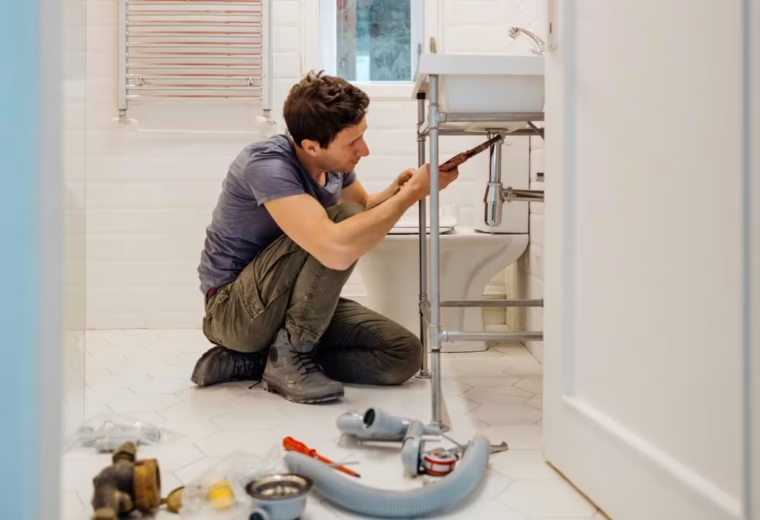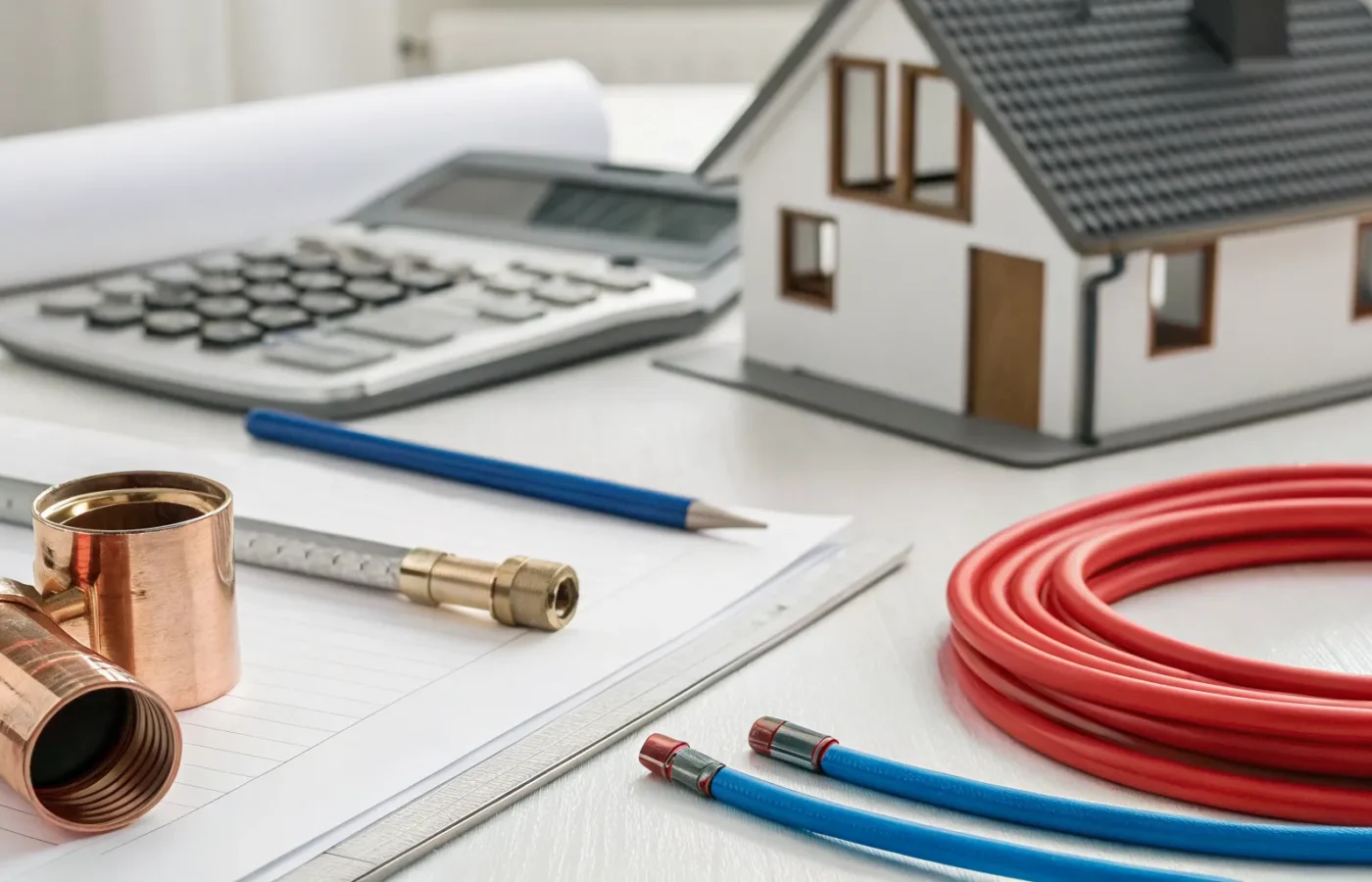
Understanding the cost to repipe a house is essential before committing to what can be one of the more significant plumbing investments a homeowner makes. Repiping involves replacing your home’s entire water supply system, and prices vary widely depending on home size, pipe material, and how accessible your existing pipes are. This guide breaks down the cost to repipe a house by every major factor, so you can budget accurately and avoid surprises when getting quotes from plumbing professionals.
What Determines the Cost to Repipe a House
Several factors combine to determine the final cost to repipe a house, and understanding each helps you budget more accurately.
<cite index=”11-1″>Total repiping cost depends on home size, number of stories, plumbing fixture count, accessibility of existing pipes, permit and inspection requirements, and the labor involved in both installation and drywall repair.</cite>
Key cost drivers include:
- Square footage and number of stories
- Number of plumbing fixtures (sinks, toilets, showers)
- Pipe material chosen
- Accessibility of walls, floors, and ceilings
- Local labor rates and permit fees
<cite index=”12-1″>Labor often makes up more than half of the total repiping cost, since the process involves opening walls, replacing lines, and restoring finishes.</cite>
Average Cost to Repipe a House by Home Size
The cost to repipe a house scales significantly with square footage, since larger homes require more piping material and labor hours.
General cost ranges by home size:
- Small homes (1-2 bedrooms, 1 bathroom): <cite index=”14-1″>Typically fall on the lower end of the pricing range</cite>
- Medium homes (3 bedrooms, 2 bathrooms): <cite index=”14-1″>Mid-range pricing applies here</cite>
- Large homes (4+ bedrooms, 3+ bathrooms): <cite index=”14-1″>These cost significantly more due to complex plumbing systems</cite>
<cite index=”11-1″>A single-story home under 2,200 square feet may require 1,000 to 1,200 linear feet of pipe, while a two-story home over 3,500 square feet could need more than 2,000 linear feet</cite>, which directly increases the overall project cost.
(Internal link opportunity: link to “Common Plumbing Problems and How to Fix Them” article)
Cost Per Linear Foot and Per Fixture
Understanding the cost to repipe a house per linear foot or per fixture helps you estimate pricing more precisely for your specific layout.
Per linear foot: <cite index=”12-1″>Expect roughly $2 to $10 per foot of piping</cite>, depending largely on the material selected.
Per fixture: <cite index=”14-1″>Cost per plumbing fixture, like sinks, showers, and toilets, typically ranges from $250 to $800 each</cite>.
This per-fixture and per-foot breakdown is especially useful for homeowners planning a partial repipe rather than a full whole-house replacement.
Pipe Material: The Biggest Cost Variable
Material choice is one of the most significant factors affecting the cost to repipe a house, with prices varying considerably between options.
Common pipe materials:
- PEX: <cite index=”10-1″>The most affordable option, typically costing around $0.40 to $2 per linear foot</cite>
- CPVC: <cite index=”10-1″>A mid-range option costing roughly $0.50 to $1 per linear foot</cite>
- Copper: <cite index=”10-1″>The most expensive material, ranging from $2 to $8 per linear foot</cite>, though it offers strong durability
Choosing the right material:
- PEX offers flexibility and lower installation time, making it popular for budget-conscious projects
- Copper remains highly durable but is more labor-intensive to install
- CPVC balances cost and performance for many mid-range projects
Labor Costs: The Largest Portion of Your Budget
Labor consistently represents the biggest share of the total cost to repipe a house, often outweighing material costs significantly.
<cite index=”9-1″>Average house repipe labor costs vary from $45 to $220 per hour, depending on the project’s complexity and the plumber’s skill level.</cite>
Factors that increase labor costs:
- Multi-story homes requiring vertical pipe routing between floors
- Slab foundations requiring floor access
- Extensive drywall demolition and repair
- Complex layouts with limited pipe accessibility
Getting multiple quotes from licensed plumbers helps ensure you’re paying fair local labor rates for your specific project scope.
(Internal link opportunity: link to “DIY vs Professional Home Improvement” article)
Additional Costs to Budget For
Beyond materials and labor, several additional expenses factor into the total cost to repipe a house that homeowners often overlook.
- Permits and inspections: Required in most areas and vary by local regulations
- Drywall repair: Necessary after pipes are accessed through walls or ceilings
- Water heater considerations: May need replacement or reconnection during major repiping projects
- Temporary water shutoff accommodations: Especially relevant for larger, multi-day projects
Budgeting an additional buffer beyond your base estimate helps account for these often-overlooked expenses.
How to Get an Accurate Repiping Quote
Since the cost to repipe a house varies so widely by region and project specifics, getting personalized quotes is essential for accurate budgeting.
Steps to get accurate quotes:
- Get at least three quotes from licensed, insured plumbers
- Ask for a detailed breakdown of material, labor, and additional costs
- Confirm whether permits and inspections are included in the quote
- Clarify the pipe material being used and why it’s recommended for your home
- Ask about warranty coverage on both materials and labor
A detailed, itemized quote helps you compare options accurately and avoid unexpected costs partway through the project.
Frequently Asked Questions
1. How much does it typically cost to repipe an entire house? <cite index=”12-1″>Most whole-home repipes cost between $4,000 and $15,000, with an average around $7,500</cite>, though this varies by home size and material.
2. What is the cheapest pipe material for repiping? <cite index=”10-1″>PEX is generally the most affordable option, with the lowest upfront material cost per linear foot.</cite>
3. How long does a whole-house repiping project take? Most whole-home repiping projects take a few days to a week, depending on home size and pipe accessibility.
4. Does repiping increase home value? <cite index=”10-1″>Yes, repiping can improve buyer confidence during inspections and often allows homes to sell at a higher price.</cite>
5. Is it cheaper to repipe the whole house at once or in sections? Repiping the entire house at once is often more cost-effective than multiple partial repipes over time, since labor setup costs are shared across the full project.
6. What factors make repiping more expensive? Multi-story layouts, slab foundations, copper piping, and limited pipe accessibility all significantly increase the total repiping cost.
Conclusion
Understanding the true cost to repipe a house, from material choice and labor to permits and additional repairs, helps you budget realistically and avoid mid-project surprises. While prices vary based on home size, pipe material, and regional labor rates, getting multiple detailed quotes remains the best way to find accurate, competitive pricing for your specific project.
Ready to move forward? Contact a few licensed local plumbers today to get personalized quotes and start planning your repiping project with confidence.
Suggested Image Alt Text:
- “Plumber installing new PEX pipes during house repiping project”
- “Comparison of copper and PEX pipe materials for repiping cost”
- “Open wall showing plumbing pipes during home repiping work”