
Home Service
Keeping Your Water Treatment System Running Smoothly: Simple Ways to Protect Your Investment
Clean, reliable water makes everyday life easier. You notice it when your morning shower feels…

There’s something comforting about filling a glass straight from the kitchen tap and enjoying a refreshing drink without giving it a second thought. Unfortunately,…
Read Full Guide →Clean, reliable water makes everyday life easier. You notice it when your morning shower feels…

Living in a modern high-rise or multi-unit building offers unbeatable urban convenience, sweeping city views, and low-maintenance lifestyles. However, upgrading interior finishes in a multi-family building comes with unique structural and regulatory challenges. Homeowners must satisfy strict homeowner association sound isolation rules, manage concrete subfloors, and handle temperature fluctuations caused by floor-to-ceiling glass windows. Choosing high-performance Engineered Hardwood Flooring provides the ideal compromise between authentic luxury, dimensional stability, and noise mitigation. Installing engineered hardwood for condo living delivers timeless organic elegance while solving the technical demands of high-rise construction. The Technical Challenges of Condo Flooring Installations Unlike single-family detached homes built over wooden floor joists, condominium units are typically constructed with concrete slab floors. Concrete continuously absorbs and releases ambient moisture, creating a challenging environment for natural building materials. Furthermore, urban multi-unit buildings feature elevated acoustic sensitivities. Walking in shoes, moving dining furniture, or dropping objects creates impact sound that easily travels through building structures to units below. Solid wood planks expand and contract significantly when exposed to moisture and humidity changes. In contrast, engineered wood planks feature a multi-layer cross-ply core structure designed to withstand subfloor dampness and ambient humidity shifts without warping, cupping, or splitting. Why Engineered Hardwood for Condo Living Outperforms Solid Wood Engineered planks feature a genuine top layer of real hardwood bonded over multiple layers of structural plywood or high-density fiberboard. This specialized manufacturing architecture makes them uniquely suited for condominium environments. Superior Dimensional Stability Condo spaces frequently feature large, sun-drenched windows that create rapid internal temperature shifts. Solid timber reacts to these thermal changes by shrinking or expanding, creating gaps or buckling. The cross-grained core layers of engineered boards neutralize natural timber movement, keeping your floors flat and stable year round. Concrete Subfloor Compatibility Solid timber requires subfloor nailing, which is impossible over solid concrete slabs without building expensive subflooring systems that steal valuable ceiling height. Engineered planks can be glued directly to concrete using specialized moisture-barrier adhesives or installed as floating floors over acoustic underlayments. Acoustic Isolation Compliance Most urban residential buildings enforce strict Impact Insulation Class (IIC) and Sound Transmission Class (STC) noise standards. Floating or glue-down engineered boards integrate smoothly with high-density acoustic underlayments like rubber, cork, or acoustic foam, ensuring full compliance with HOA quiet hours and noise bylaws. Selecting the Right Features for Condo Interiors Choosing the optimal floor planks involves balancing aesthetic preferences with practical performance specifications tailored for high-rise living.…
A website can be an important source of enquiries for a contractor, roofer, plumber, painter,…
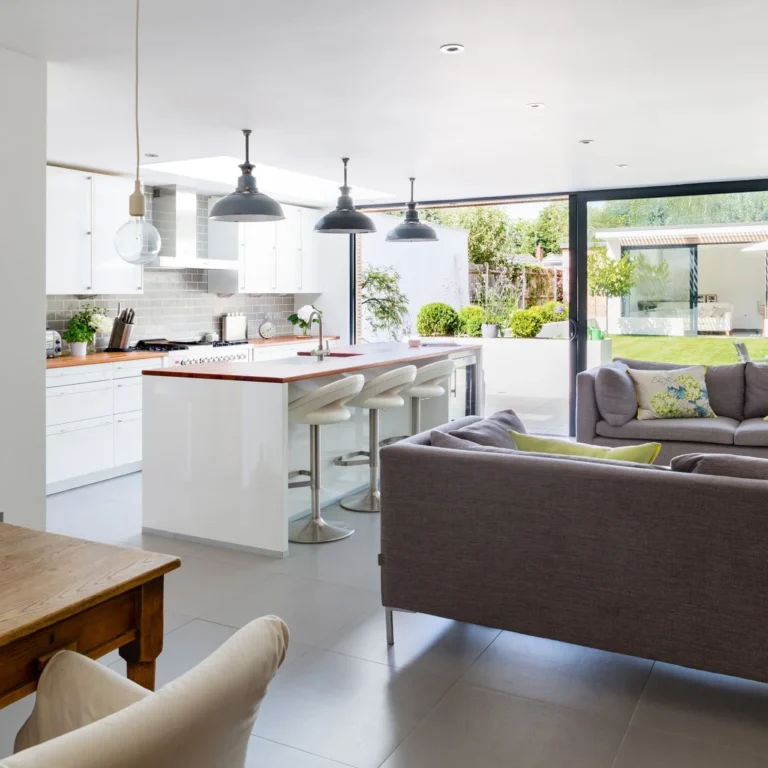
Choosing between an open floor plan vs traditional layout is one of the biggest decisions…

If your home feels chaotic despite regular cleaning, the problem might not be clutter —…

Wondering how to decorate on a budget without your home looking cheap? You’re not alone…

Wondering how to decorate on a budget without your home looking cheap? You’re not alone…

Painting a room sounds simple until the roller marks show up and the edges look…