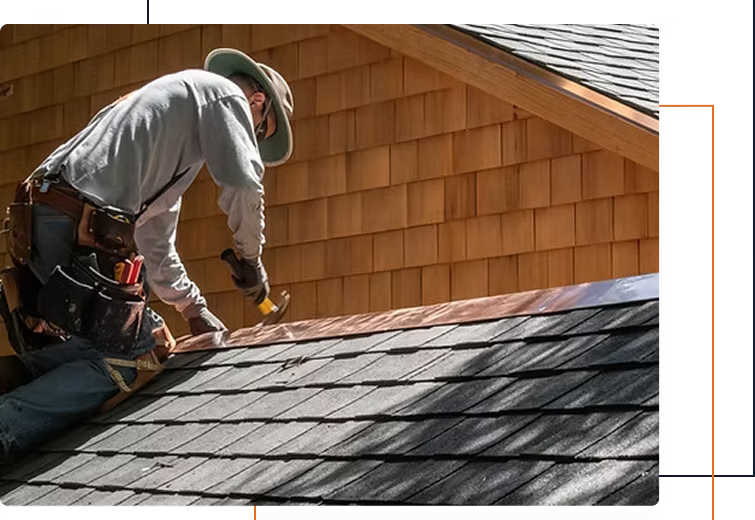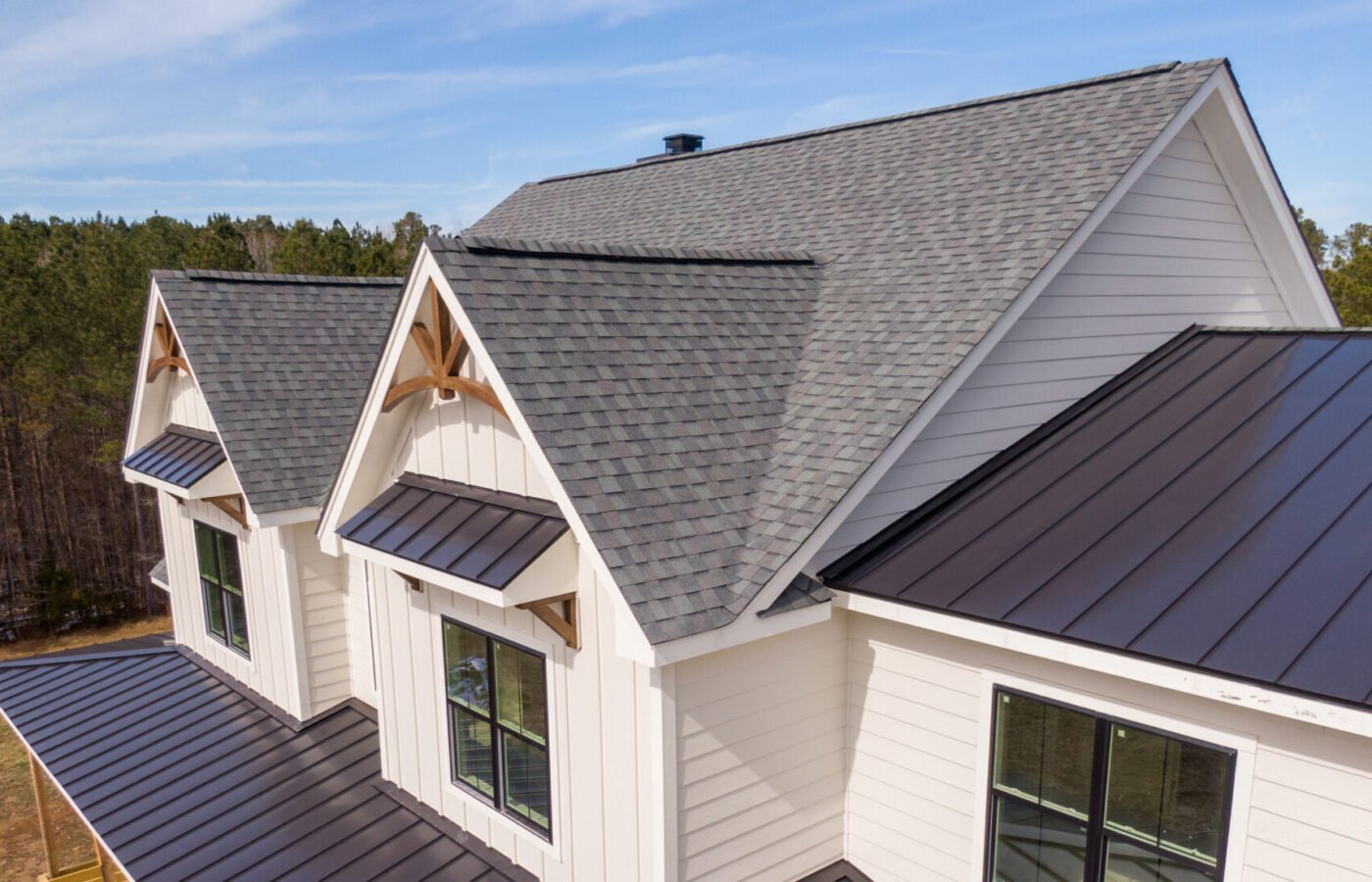
Deciding between metal roofing vs asphalt shingles is one of the most important choices you’ll make during a roof replacement or new construction project. Both materials offer distinct advantages, and the right choice depends on your budget, climate, and long-term homeownership plans. This guide breaks down the metal roofing vs asphalt shingles debate across cost, durability, maintenance, and appearance, helping you make an informed decision that fits both your immediate budget and long-term property goals.
Overview: Metal Roofing vs Asphalt Shingles Basics
Before diving into specific comparisons, it helps to understand the fundamental differences in the metal roofing vs asphalt shingles discussion.
Asphalt shingles:
- The most commonly used roofing material for residential homes
- Made from a fiberglass base coated with asphalt and mineral granules
- Available in a wide range of colors and styles
Metal roofing:
- Made from steel, aluminum, or other metal alloys
- Available in panels or shingle-style configurations
- Known for exceptional durability and weather resistance
Understanding these basics sets the foundation for comparing how each material performs across the factors that matter most to homeowners.
(Internal link opportunity: link to “Signs You Need a Roof Replacement” article)
Cost Comparison: Upfront Investment
Cost is often the deciding factor in the metal roofing vs asphalt shingles decision, and the difference can be significant.
Asphalt shingles:
- Generally the more budget-friendly option upfront
- Lower material and installation costs
- Widely available, with many contractors experienced in installation
Metal roofing:
- Higher upfront material and installation costs
- Specialized installation often requires experienced metal roofing contractors
- Premium metal styles (like standing seam) cost more than basic panel options
The bigger picture:
While asphalt shingles win on initial cost, metal roofing’s longer lifespan often results in better long-term value, since you’re less likely to need a full replacement for several decades.
Durability and Lifespan Comparison
Longevity is where the metal roofing vs asphalt shingles comparison shows its most significant difference.
Asphalt shingle lifespan:
- Typically lasts 20-25 years with proper maintenance
- More vulnerable to damage from severe weather, hail, and high winds
- Prone to curling, cracking, and granule loss over time
Metal roofing lifespan:
- Can last 40-70 years depending on material quality
- Highly resistant to wind, hail, and fire damage
- Doesn’t crack, curl, or lose granules like asphalt shingles
For homeowners planning to stay in their property long-term, metal roofing’s extended lifespan can make it a more practical investment despite the higher initial cost.
Weather and Climate Performance
Climate plays a significant role in determining which option wins the metal roofing vs asphalt shingles comparison for your specific location.
Best conditions for asphalt shingles:
- Moderate climates without extreme temperature swings
- Areas with lower risk of severe hail or high wind events
Best conditions for metal roofing:
- Regions with heavy rainfall, since metal sheds water efficiently
- Areas prone to wildfires, due to metal’s fire-resistant properties
- Hot climates, since reflective metal roofing can reduce cooling costs
For Indian homeowners specifically:
Metal roofing performs particularly well during monsoon season due to its water-shedding properties, while its reflective qualities can help reduce indoor heat during intense summer months.
(Internal link opportunity: link to “Seasonal Home Maintenance Checklist” article for monsoon prep tips)
Maintenance Requirements
Ongoing upkeep is an important factor often overlooked in the metal roofing vs asphalt shingles decision.
Asphalt shingle maintenance:
- Requires periodic inspection for cracked or missing shingles
- Gutters need regular cleaning to prevent granule buildup issues
- More susceptible to algae and moss growth in humid climates
Metal roofing maintenance:
- Generally requires less frequent maintenance overall
- Occasional inspection for loose fasteners or seam issues
- Resistant to algae, moss, and pest damage
Lower long-term maintenance requirements make metal roofing appealing for homeowners who want to minimize ongoing upkeep responsibilities.
Energy Efficiency and Environmental Impact
Energy performance is an increasingly important consideration in the metal roofing vs asphalt shingles comparison.
Asphalt shingles:
- Absorb more heat, potentially increasing cooling costs in hot climates
- Standard shingles are not typically recyclable at end of life
Metal roofing:
- Reflects solar heat, helping reduce indoor cooling costs
- Highly recyclable, making it a more environmentally friendly choice
- Can be installed with reflective coatings for even greater efficiency
For homeowners prioritizing energy efficiency and sustainability, metal roofing generally offers stronger long-term benefits.
Aesthetic and Style Considerations
Appearance remains a personal preference in the metal roofing vs asphalt shingles debate, though each offers distinct style options.
Asphalt shingle styles:
- Wide range of colors and textures available
- Traditional appearance that suits most architectural styles
- Easier to match with existing neighborhood aesthetics
Metal roofing styles:
- Modern standing seam panels for contemporary homes
- Shingle-style metal roofing that mimics traditional appearances
- Growing popularity for both modern and farmhouse-style designs
Both materials now offer diverse style options, making aesthetics less of a limiting factor than in previous years.
Frequently Asked Questions
1. Is metal roofing worth the higher upfront cost compared to asphalt shingles? For homeowners planning to stay long-term, metal roofing’s extended lifespan and lower maintenance often justify the higher initial investment.
2. Which roofing material is better for hot, sunny climates? Metal roofing generally performs better in hot climates due to its reflective properties, which help reduce indoor cooling costs.
3. Does metal roofing make more noise during rain? With proper installation, including solid decking and insulation, modern metal roofing produces minimal noise during rainfall.
4. How long does asphalt shingle roofing typically last? Asphalt shingles typically last 20-25 years, depending on climate conditions and maintenance quality.
5. Is metal roofing more resistant to storm damage than asphalt shingles? Yes, metal roofing generally offers superior resistance to wind, hail, and fire compared to traditional asphalt shingles.
6. Can metal roofing be installed over existing asphalt shingles? In some cases, yes, though it depends on local building codes and the condition of the existing roof deck. A professional assessment is recommended.
Conclusion
Choosing between metal roofing vs asphalt shingles ultimately depends on your budget, climate, and long-term homeownership plans. Asphalt shingles offer a lower upfront cost and remain a solid choice for many homeowners, while metal roofing delivers superior durability, energy efficiency, and long-term value despite the higher initial investment. Weighing these factors against your specific needs will help you choose the roofing material that best protects your home for years to come.
Ready to make your decision? Consult with a local roofing professional to get personalized quotes and recommendations based on your home’s specific needs.
Suggested Image Alt Text:
- “Comparison of metal roofing vs asphalt shingles on residential homes”
- “Standing seam metal roof installed on modern home”
- “Traditional asphalt shingle roof on suburban house”